Key Takeaways
- Urban land scarcity forces a shift from horizontal expansion to vertical automated storage and handling [2][5].
- Phased brownfield modernization allows legacy terminals to upgrade equipment and software with zero flight disruption.
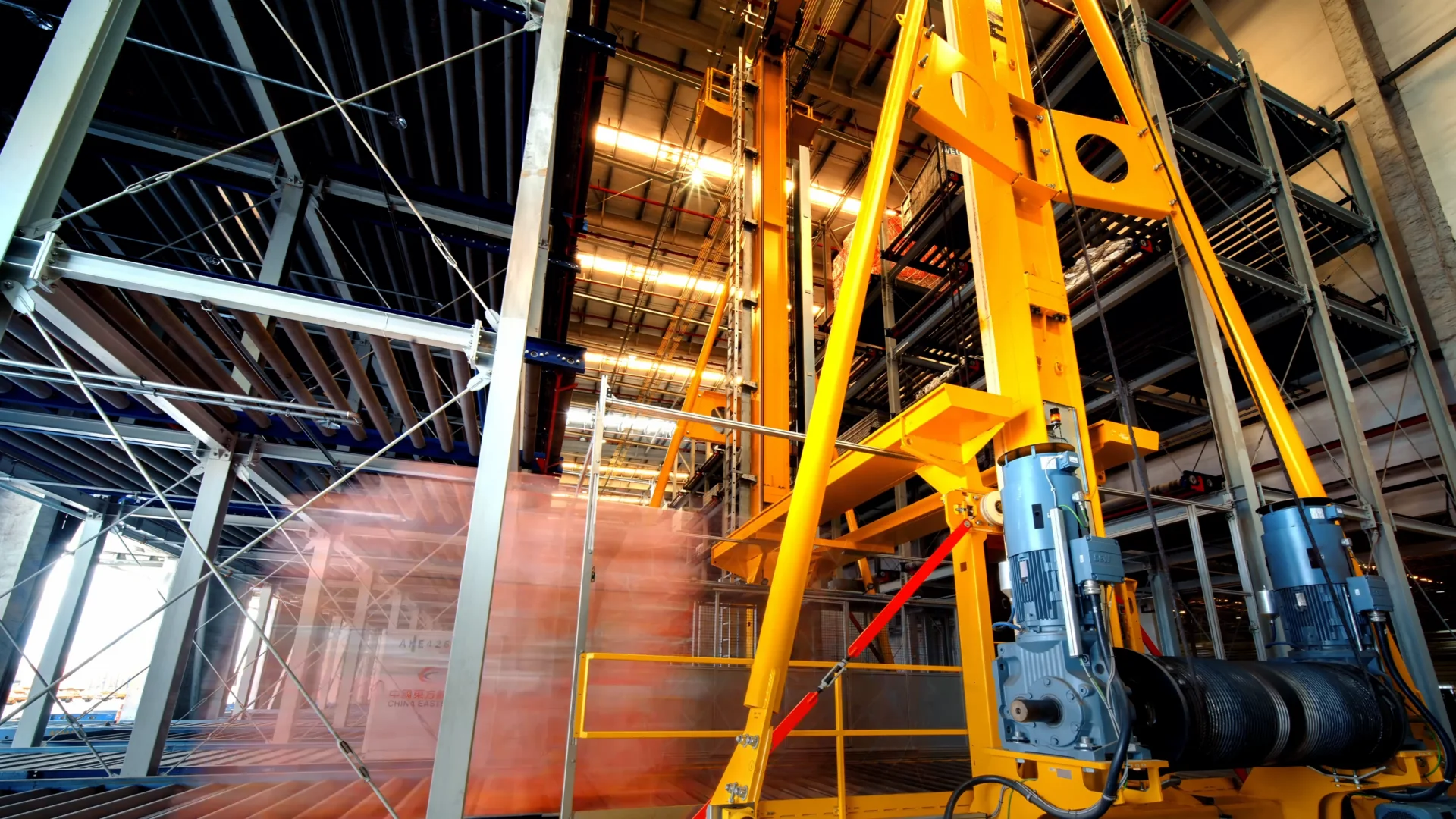
- Properly executed automation increases volumetric capacity by up to 300 % and cuts ULD turnaround times by more than 50 %.
- Integrated cold-chain systems achieve full IATA CEIV Pharma compliance while maintaining operational continuity [4].
- Turnkey providers that manufacture both hardware and software deliver the highest system availability and lowest total cost of ownership.
The Infrastructure Challenge in High-Density Asian Hubs
Hong Kong, Shanghai Pudong, Singapore Changi, Incheon, Tan Son Nhat and Kuala Lumpur all face the same structural limits: soaring throughput, temperature-sensitive cargo growth and almost no available land for new construction [2][3][5]. Aviation authorities continue to tighten performance and safety requirements [1]. Legacy facilities designed for lower volumes and manual processes cannot meet these demands through incremental improvements alone.
The Brownfield Advantage: Modernization Without Downtime
Greenfield terminals are rare. Most operators must upgrade active facilities. A phased brownfield methodology addresses this reality by:
- Isolating operational modules
- Installing new equipment and control systems during off-peak windows
- Dynamically re-routing cargo flows through parallel lines
- Commissioning each zone while the rest of the terminal continues normal operations
This approach has been proven at multiple high-volume Asian airports and delivers continuous service throughout the upgrade programme.
Performance Gains from Modernized Automated Systems
| Metric | Legacy Terminal | Modernized Automated Terminal | Typical Impact |
|---|---|---|---|
| Storage density | Horizontal floor storage | Vertical multi-level ETV / ASRS | Up to +300 % capacity within existing footprint |
| ULD turnaround time | Manual fork-truck dependent | Automated AGV + ETV flow | >50 % reduction |
| System uptime | Reactive maintenance | Predictive diagnostics + 24/7 monitoring | 99.9 % availability |
| Handling accuracy | Higher misplacement risk | RFID / barcode tracking via Cargo Professional Suite | Near-zero error rate |
| Cold-chain integrity | Fragmented temperature control | Integrated automated cold-chain systems | Full IATA CEIV Pharma compliance [4] |
Key Business Benefits of Phased Automation
- Vertical capacity expansion without new land acquisition [2][5]
- Zero operational downtime during the upgrade
- Lower total cost of ownership through reduced labour dependency, energy optimization and longer equipment life
- Guaranteed high availability aligned with airport SLAs
- Single-source accountability—mechanical hardware, proprietary software (Cargo Professional Suite / Cargo Direct), integration and local maintenance all from one partner
Real World Applications
Leading aviation hubs demonstrate the benefits of fully automated air cargo systems. At Ho Chi Minh City's Tan Son Nhat Airport, Saigon Cargo Service Corporation (SCSC) operates a fully automated air cargo terminal built by Lödige Industries. At Shanghai Pudong International Airport (PVG), China Eastern Air Logistics utilizes an advanced AGV Smart Cargo Hub. At Hong Kong International Airport, Lödige Industries supplied automated material handling systems for the Cainiao Smart Gateway and AAT COOLPORT.
Frequently Asked Questions (FAQs)
Q: Can an active air cargo terminal be fully modernized without causing flight delays?
A: Yes. Using a phased brownfield approach, equipment and software are upgraded module by module during low-volume periods while cargo is temporarily routed through parallel operational lines. Continuous flight operations are maintained throughout.
Q: How does new automation software integrate with existing airport and carrier systems?
A: Modern platforms such as Cargo Professional Suite use open APIs and standard protocols, enabling bidirectional data exchange with legacy TMS, airline ERPs, customs platforms and civil aviation networks.
Q: What makes a true turnkey automation partner different?
A: A turnkey provider manufactures the heavy mechanical equipment, develops the control software, performs system integration and supplies local 24/7 maintenance. This single-source model reduces interface risks and accelerates both project delivery and long-term performance.
Conclusion
For Asian air cargo hubs constrained by land and rising volume, the strategic path is clear: modernize existing terminals through high-density automation executed in carefully phased stages. When hardware, software and integration expertise come from a single experienced partner, operators achieve dramatic capacity and reliability gains while protecting the continuous operation that aviation demands.
Reference
[1] Civil Aviation Administration of China (CAAC) - 14th Five-Year Special Plan for Air Logistics Development. http://www.caac.gov.cn/English/News/202305/t20230515_219644.html
[2] Airport Authority Hong Kong (AAHK / HKIA Cargo) - World's Busiest Cargo Airport Statistics. https://www.hongkongairport.com/en/media-centre/press-release/2026/pr_1859
[3] Changi Airport Group (CAG / Changi Air Cargo) - Airfreight Operating Indicators & Throughput Data. https://www.changiairport.com/en/corporate/our-media-hub/newsroom/2026/changi-airport-s-q2-2026-operating-indicators.html
[4] International Air Transport Association (IATA). CEIV Pharma – Center of Excellence for Independent Validators in Pharmaceutical Logistics. https://www.iata.org/en/services/certification/special-cargo/ceiv-pharma/
[5] Airports Council International Asia-Pacific & Middle East. Asia-Pacific and Middle East will continue to lead global air cargo growth through 2028. https://www.aci-asiapac.aero/media-centre/news/asia-pacific-and-middle-east-will-continue-to-lead-global-air-cargo-growth-through-2028