Key Takeaways
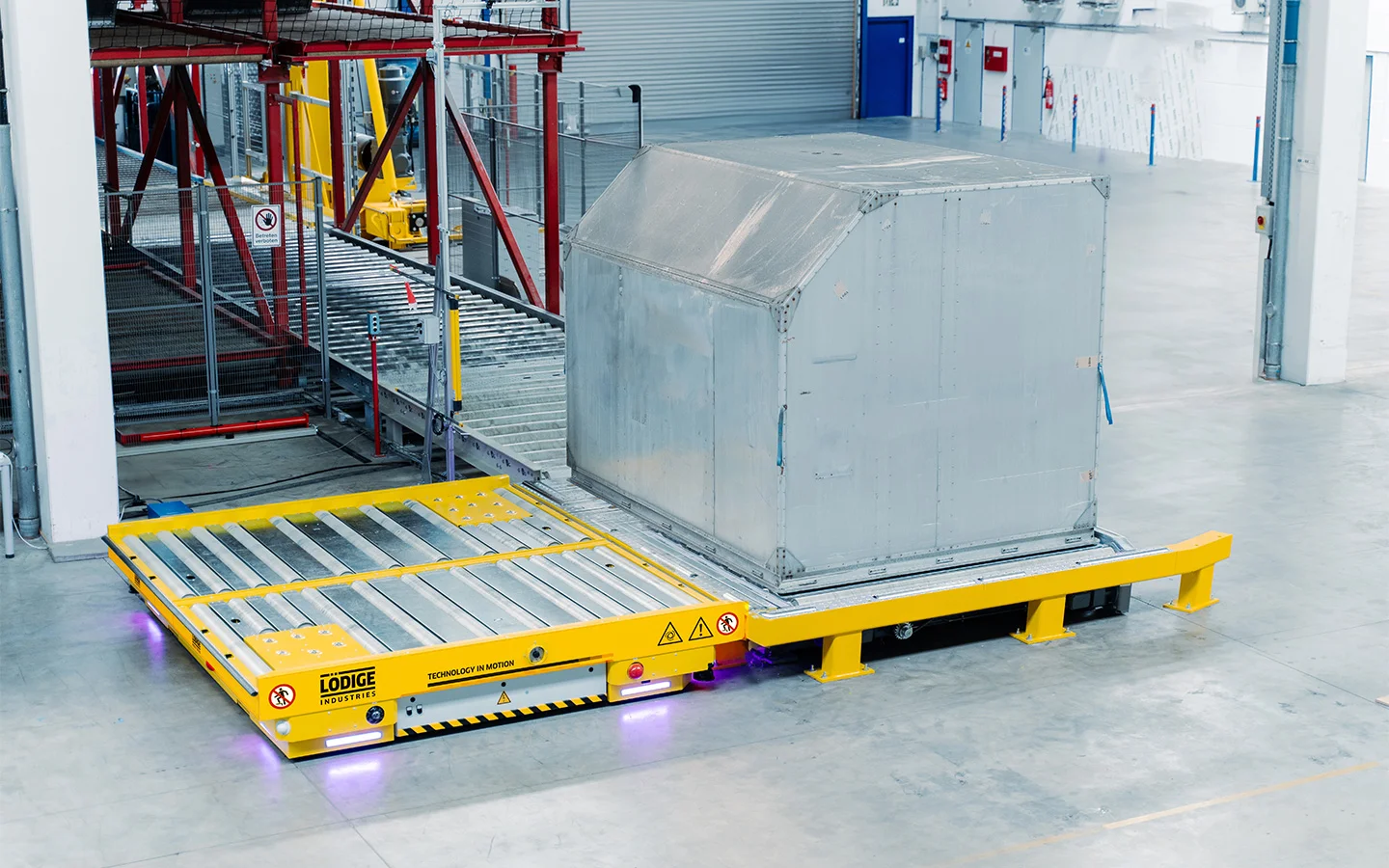
- Fully automated systems combine Elevating Transfer Vehicles (ETVs), Transfer Vehicles (TVs), Automated Guided Vehicles (AGVs) and Lift & Run systems under one software brain.
- Centralized Terminal Management Systems (TMS) such as Lödige’s Cargo Professional Suite, with Cargo Direct as the real-time execution engine, coordinate every movement.
- Full automation delivers 24/7 continuous operation, near-zero inventory errors, up to 300 % vertical space utilization and dramatically higher worker safety.
- The structured, real-time data generated by automated systems is the indispensable prerequisite for predictive maintenance, dynamic slotting and autonomous optimization.
Why Full Automation Has Become Essential
Major Asian gateways Hong Kong (HKIA), Shanghai Pudong (PVG), Singapore Changi (SIN), Incheon (ICN), Tan Son Nhat (SGN) and Kuala Lumpur (KUL)—face simultaneous pressure from e-commerce growth, temperature-controlled cargo and severe land constraints [2][5]. Manual and semi-automated processes can no longer absorb peak volumes without rising costs, longer dwell times and higher error rates. Regulatory bodies continue to raise safety and service-level requirements, making high-density automation the only scalable path [1].
Core Hardware Components of a Fully Automated Terminal
A modern automated terminal relies on four complementary equipment families working in continuous coordination:
| Equipment | Primary Function | Typical Application |
|---|---|---|
| Elevating Transfer Vehicle (ETV) | High-bay vertical + horizontal storage and retrieval of ULDs | Dense multi-level racking |
| Transfer Vehicle (TV) | High-speed horizontal movement along main transport corridors | Connecting work stations and storage zones |
| Automated Guided Vehicle (AGV) | Flexible floor-level transport of ULDs and pallets | Dock areas, build-up/break-down stations |
| Lift & Run systems | Rapid buffer storage and short-distance transfer | High-frequency staging zones |
These machines only reach their full potential when orchestrated by a single intelligent control layer.
The Software Brain: Cargo Professional Suite & Cargo Direct
Lödige’s Cargo Professional Suite acts as the master Terminal Management System. It unifies inventory, flight schedules, customs data and operational rules.
Within the suite, Cargo Direct functions as the real-time execution engine—the “brain” that:
- Translates high-level tasks into precise machine instructions
- Dynamically optimizes routes and prevents bottlenecks
- Synchronizes ETVs, AGVs, TVs and conveyors in real time
This closed-loop control eliminates the decision delays and communication gaps inherent in manual or semi-automated environments.
Performance Comparison: Manual vs Semi-Automated vs Fully Automated
| Dimension | Manual | Semi-Automated | Fully Automated |
|---|---|---|---|
| Storage density | Low (floor stacking) | Moderate (manual racking) | High (multi-level ETV/ASRS) |
| Material Transport | Forklifts & tugs | Powered conveyors + manual intervention | Autonomous ETVs, AGVs, TVs, Lift & Run |
| Control logic | Paper / basic TMS | PLC + human input | Centralized Cargo Professional Suite + Cargo Direct |
| Operating hours | Shift-dependent | Partial continuous | True 24/7 autonomous |
| Data quality for AI | Siloed, incomplete | Fragmented machine logs | Structured real-time telemetry across all assets |
How Full Automation Creates the AI Foundation
AI systems require continuous, high-fidelity, structured data. Fully automated terminals generate exactly that: every ULD movement, sensor reading, cycle time and equipment state is recorded in real time.
This data enables:
- Predictive maintenance (reducing unplanned downtime)
- Dynamic slotting and load balancing
- Future autonomous flight build-up and resource allocation
Without the clean data layer produced by full automation, advanced AI applications remain theoretical.
Real World Applications
Leading aviation hubs demonstrate the benefits of fully automated air cargo systems. At Ho Chi Minh City's Tan Son Nhat Airport, Saigon Cargo Service Corporation (SCSC) operates a fully automated air cargo terminal built by Lödige Industries. At Shanghai Pudong International Airport (PVG), China Eastern Air Logistics utilizes an advanced AGV Smart Cargo Hub. At Hong Kong International Airport, Lödige Industries supplied automated material handling systems for the Cainiao Smart Gateway and AAT COOLPORT.
Frequently Asked Questions (FAQs)
Q: What is the practical difference between semi-automated and fully automated air cargo systems?
A: Semi-automated systems use powered equipment (like roller conveyors or hoists) but rely on human operators for transport decisions and equipment movement. Fully automated systems integrate automated hardware (ETVs, AGVs, Lift and Run) with centralized control software like Cargo Direct, executing storage, retrieval, and transport autonomously without manual intervention.
Q: How does Cargo Direct function as the "brain" in a centralized terminal management software suite?
A: Cargo Direct translates high-level logistics tasks from the Terminal Management System (Cargo Professional Suite) into real-time equipment execution commands. It acts as a neural control hub, dynamically allocating tasks to ETVs, TVs, and AGVs, calculating optimal travel paths, preventing traffic bottlenecks, and ensuring synchronization across all handling hardware.
Q: Why is full automation considered a prerequisite for AI?
A: AI algorithms require continuous, high-quality, structured data to make accurate predictions [4]. Fully automated systems record every ULD move, sensor state, and cycle time in real time. This rich data ecosystem empowers current AI applications—such as predictive maintenance and dynamic slotting—and future AI innovations, such as autonomous load balancing and predictive flight build-up scheduling [5].
Conclusion
Moving from manual or semi-automated handling to a fully integrated automated terminal is no longer optional for high-volume air cargo hubs. By combining proven heavy-duty equipment with intelligent software such as Cargo Professional Suite and Cargo Direct, operators gain immediate throughput and density advantages while simultaneously building the data foundation required for the next generation of AI-driven logistics.
Reference
[1] Civil Aviation Administration of China (CAAC) - 14th Five-Year Special Plan for Air Logistics Development. http://www.caac.gov.cn/English/News/202305/t20230515_219644.html
[2] Airport Authority Hong Kong (AAHK / HKIA Cargo) - World's Busiest Cargo Airport Statistics. https://www.hongkongairport.com/en/media-centre/press-release/2026/pr_1859
[3] Changi Airport Group (CAG / Changi Air Cargo) - Airfreight Operating Indicators & Throughput Data. https://www.changiairport.com/en/corporate/our-media-hub/newsroom/2026/changi-airport-s-q2-2026-operating-indicators.html
[4] International Air Transport Association (IATA). CEIV Pharma – Center of Excellence for Independent Validators in Pharmaceutical Logistics. https://www.iata.org/en/services/certification/special-cargo/ceiv-pharma/
[5] Airports Council International Asia-Pacific & Middle East. Asia-Pacific and Middle East will continue to lead global air cargo growth through 2028. https://www.aci-asiapac.aero/media-centre/news/asia-pacific-and-middle-east-will-continue-to-lead-global-air-cargo-growth-through-2028